AI Can't Replace Developers


Disclaimer : "The views and opinions expressed on this blog are purely my own. They do not reflect the views, policies, or opinions of my current or past employers, clients, or any organizations I am associated with. All content provided here is for informational and educational purposes only and does not constitute professional advice."
What is Devin AI?
Devin AI is the AI software engineer everyone is talking about. It's designed to revolutionize software development through collaboration with humans, leveraging its capabilities to transform the industry. In this blog, we'll explore its origins, impact, and future outlook.
Devin is an AI expected to function as a software engineer, capable of coding, debugging, and even developing complete apps and websites with minimal human intervention.
What makes Devin special? Why do people claim it's a "human replaceable AI"?
1. Devin as a Software Engineer: Devin can work autonomously and deploy code across multiple programming languages.
2. Learning and Adapting: Devin AI learns from each project, continuously improving its efficiency and capabilities over time.
3. Human-Friendly Design: Devin is designed to assist rather than replace human engineers, acting as a collaborative partner.
4. Real-World Capabilities: Devin has already demonstrated its potential in actual projects, according to early adopters.
Who are the developers behind Devin AI, and where does it come from?
Cognition is the company behind Devin AI, led by Scott Wu. Their focus is on making AI smarter, particularly in problem-solving. With Devin, their goal is to create an AI "buddy" that can team up with real engineers. Devin acts as a sidekick and a pocket tool, handling the day-to-day tasks, which allows engineers to focus on bigger, more complex problems.
How much does AI affect software engineers and developers? Will it eliminate IT jobs?
To be honest, I have mixed feelings about this. Learning about such advanced AI in this rapidly evolving world left me speechless about my own future. However, after deep reflection, I've come to a clearer perspective.
While developing any website, application, or software such as an API, dashboard, or gallery, I follow a roadmap for debugging and solving errors while building each element and component.
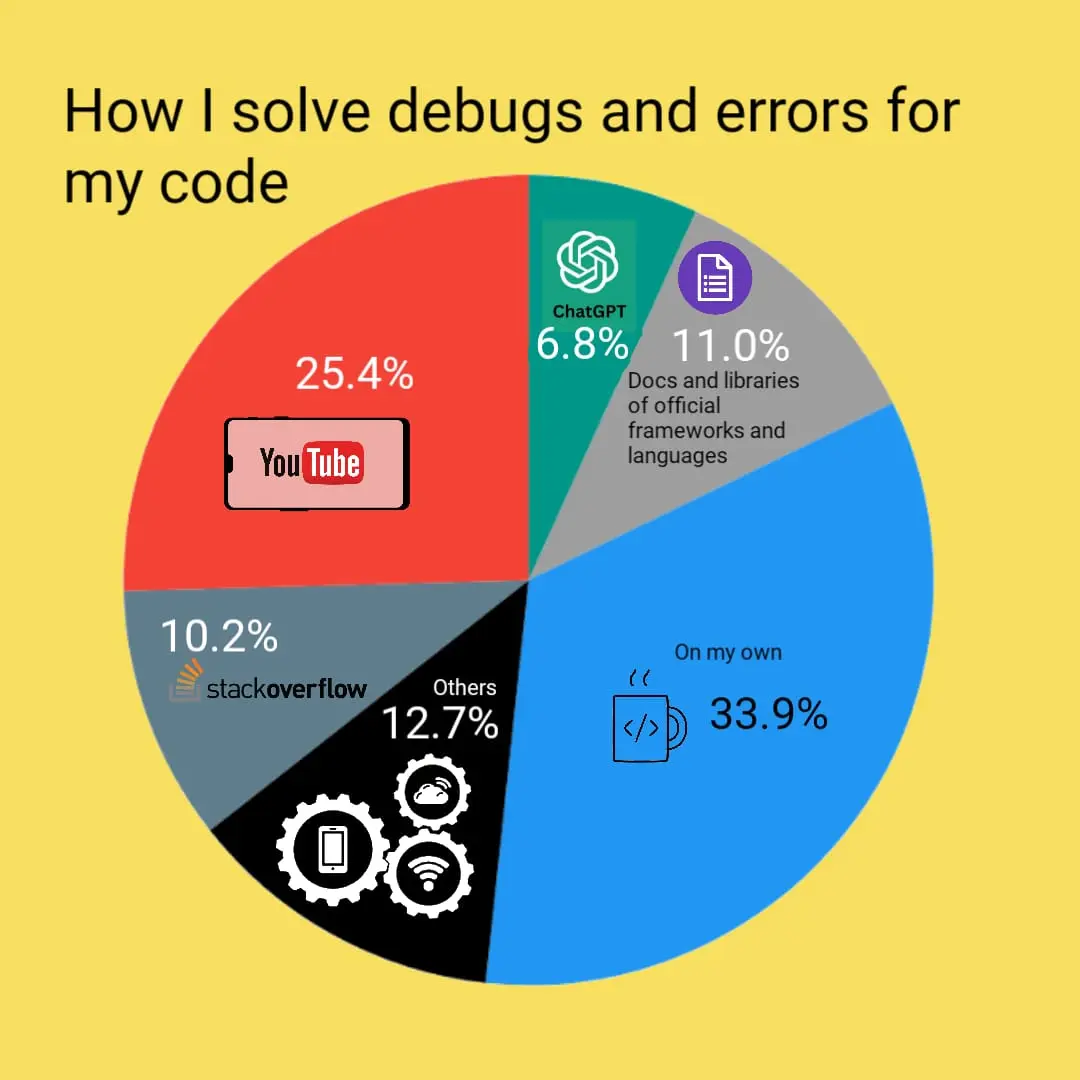
Even if AI adapts to generating components and debugging programs independently, there are still crucial aspects that every programmer must consider.
AI Can't Replace Developers: 6 Key Reasons
1. Non-Automated Code Generation: AI-powered tools like code generators or code suggestion plugins can speed up development by automatically generating code snippets based on user input or predefined templates. However, they are unable to deliver complex code logic or complete syntax results. Features like complete website development, responsive design, and understanding file structures are still lacking. For example, AI image and video generators can create 4K quality visuals, but they still make minor mistakes—which is why graphic designers still have jobs.
2. Natural Language Processing (NLP): NLP algorithms can analyze and understand user input, enabling features like voice search, sentiment analysis, and language translation on websites. While useful, these are supplementary tools, not replacements for developer creativity.
3. Working Across Different Platforms: An AI won't easily understand file structures and errors from packages. Even with constant updates, AI can't fully grasp program dependencies across different versions of platforms, operating systems, libraries, and IDEs. These libraries are vast—practically limitless. AI might come as a desktop application rather than a web page to support localhost environments. Consider working on different computers daily: your usability would be interrupted every time you switch between Mac, Windows 11, Linux, Windows 10, Windows 7, Ubuntu, and Windows XP.
4. Database Integration and Security: Even if AI can program databases and APIs from past project experience, database management systems (DBMS) allow users to create, read, update, and delete data. DBMS is needed in nearly every sector—banking, ticket reservations, hotel bookings, and online shopping. Given the sensitive nature of data, organizations cannot depend on AI for such critical systems. Data visualization, real-time reporting, security functionality on live servers, support, and ongoing development require human oversight. A large organization with sensitive data will not rely on AI for maintaining real-world transactions.
5. Creating New Abilities and Adapting Technologies: AI always improves mechanisms based on existing patterns. It lacks the ability to have multiple viewpoints, remote perspectives for real-time maintenance on live servers, or an orienting point for complex decision-making. AI cannot create a new perception of working projects.
[ A.I. < Human with a burning desire ]
6. Being Creative: AI cannot think outside the box like humans. AI creations always remain relevant to past projects and training data. It won't understand that everything can be achieved in a different, unique manner. AI cannot achieve something truly new or innovative without the spark of a human brain.
Final Thoughts
While AI like Devin is impressive and will undoubtedly change how we work, it will never truly replace human developers. The creativity, problem-solving abilities, adaptability, and human touch that developers bring to the table are irreplaceable. AI is a powerful tool that can assist us, automate repetitive tasks, and help us work more efficiently—but the heart of software development will always be human.
As developers, we should embrace AI as a collaborator, not fear it as a competitor. The future belongs to those who can leverage AI's capabilities while bringing their unique human strengths to the table.
Blog Details
- Category: AI & Web Development
- Type: Opinion & Analysis
- Published: 10 November, 2022
- Author: Mohan Yadav
- Reading Time: 12 minutes
AI is an interactive learning companion designed to help developers understand AI concepts, experiment with machine learning models, and explore the intersection of AI and software development. Features include:
AI model playground. Code generation demos. Natural language processing tools. Interactive tutorials. Ethical AI guidelines.
Perfect for developers looking to stay ahead in the AI-driven world.
Key Takeaways
AI assists, but doesn't replace human developers. Creativity and problem-solving are uniquely human. Complex systems require human oversight. AI is a tool, not a competitor.